
Jun 27, 2026 · ApiAny Team
用 image2 生成图片,这几种提示词你要记住
一句话 提示词千变万化,最重要的是学习提示词结构
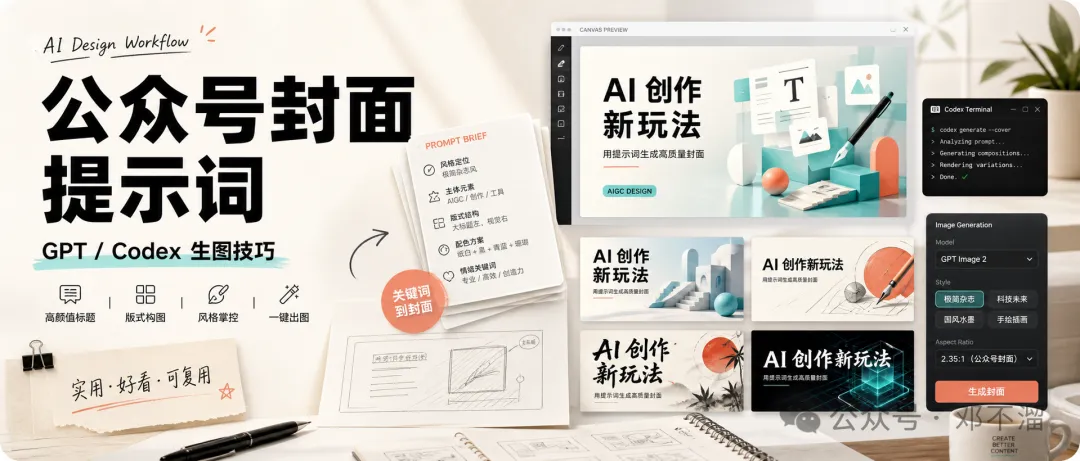
我总结了几种模板,一句话概括:
提示词千变万化,最核心的是掌握其结构。
下面我按类型进行拆解。
第一类:公众号封面图
这类图片最重要的不是单纯的“好看”,而是要 让读者一眼就能看懂文章在讲什么 。
因此,在提示词中必须明确写清:标题、主题、主体画面、留白位置以及公众号的裁剪比例。
具体模板可以参考以下结构:
Create a WeChat official account cover image.
Topic: "[your article topic]".
The main visual should not be a generic robot or vague tech background. Use concrete objects to express the topic, such as prompt cards, a design canvas, an image generation panel, or cover drafts.
The main Chinese title must be clear and readable, ideally 6 to 10 Chinese characters.
Composition: suitable for a WeChat cover. Put the large title on the left, the main visual on the right, and leave enough safe margins.
Style: mature new-media editorial cover, clean, polished, practical, not a cheap marketing poster.
公众号封面提示词示例
第二类:抽象概念图
这类配图非常适合用于正文,辅助解释抽象概念。
例如:专注力、焦虑、记忆、上下文、Agent、工作流等。
其通用模板大致如下:
Create an abstract conceptual poster around the concept "[your keyword]".
Do not illustrate the word literally. Do not use a generic office scene.
First understand the inner relationships behind this concept: what is at the center, what surrounds it, what creates distraction, what creates order, and how the energy flows.
Visual elements can include tree rings, contour lines, water ripples, fingerprint textures, fine-line nodes, and subtle paper texture.
The main Chinese title must be clear and readable.
The image should feel systematic, but not like a complicated flowchart.
Use generous negative space and restrained colors. It should work as an illustration inside a WeChat article.
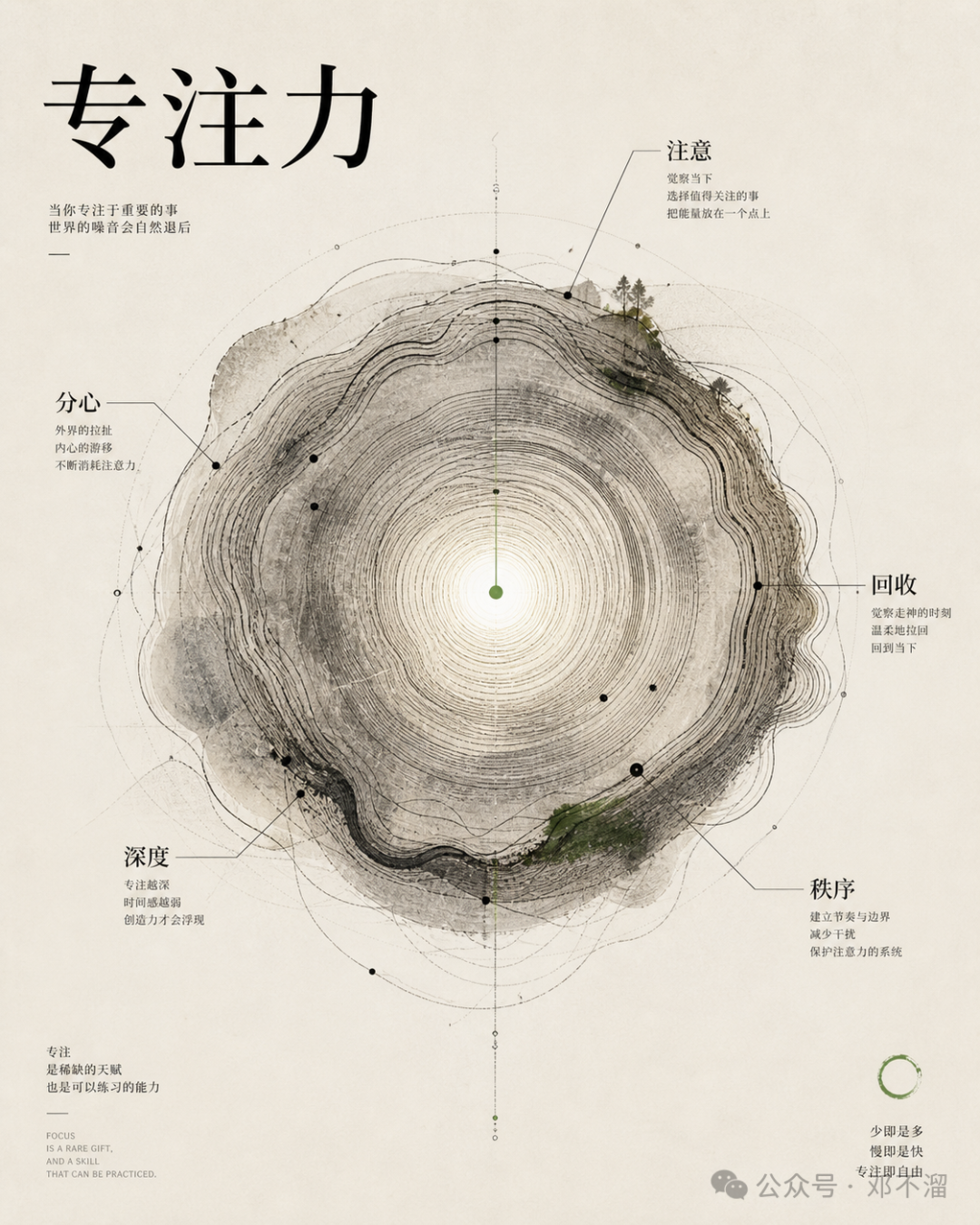
我使用这一结构生成了一张关于“专注力”的示意图:
第三类:文字隐喻海报
这类图示非常适合用来表达情绪、认知或方法论。
例如:边界感、松弛感、确定性、提示词、记忆、系统感等。
其核心在于pography poster around the keyword "[your keyword]".
The Chinese keyword must be huge, clear, and readable.
The text should not be pasted on top of the image. It should become part of the visual structure.
Based on the meaning of the word, turn the typography into a visual metaphor: a wall, a gate, a platform, a path, a container, an installation, or a spatial relationship.
Add a few tiny human figures, lines, measuring marks, or light and shadow to create a subtle story.
Keep the colors restrained and the layout spacious. Avoid garbled Chinese text and overcrowded composition.
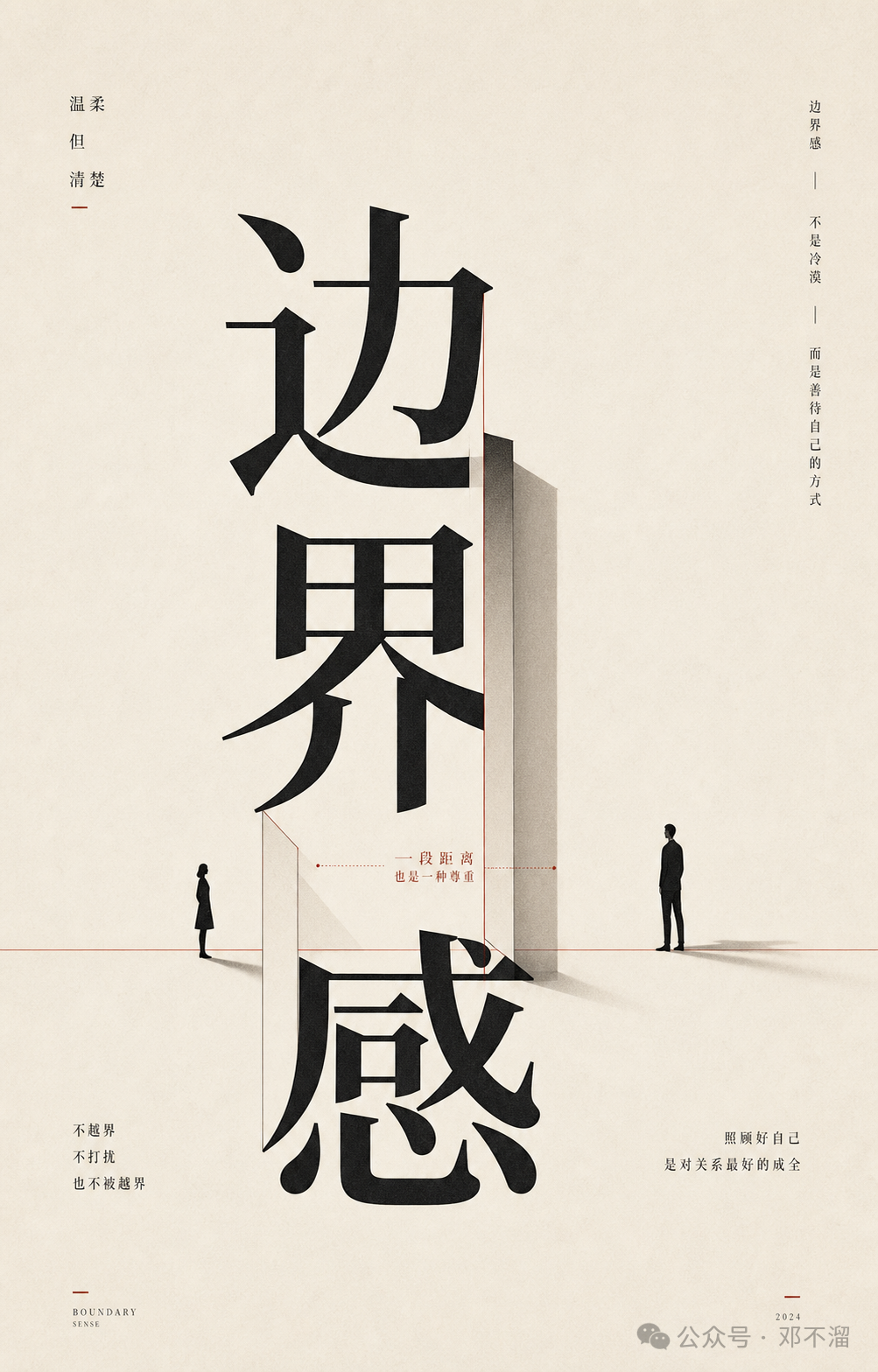
我使用这套结构生成了一张以“边界感”为主题的海报:
第四类:设计师风景海报
风景图通常也分为两种。
一种是普通的壁纸。
另一种则是适合放入文章中的设计师风格风景海报。
两者的区别在于:后者具备清晰的构图骨架、预留的文字空间以及自觉的版式意识。
其提示词模板大致可以这样写:
Create a collectible designer landscape poster.
Theme: "[your landscape theme]".
Do not make it a generic landscape wallpaper.
First design a clear composition structure, such as a diagonal brushstroke, circular window, long scroll, poster layout with large negative space, or a cropped close-up.
The landscape should serve the composition, not simply fill the whole image.
The Chinese title must be clear and placed in the negative space.
Style can include thick oil-paint texture, modern gallery poster design, paper texture, and natural color palettes.
Avoid: tourist-poster clichés, overly realistic stock-photo style, tiny titles, and irrelevant English text.
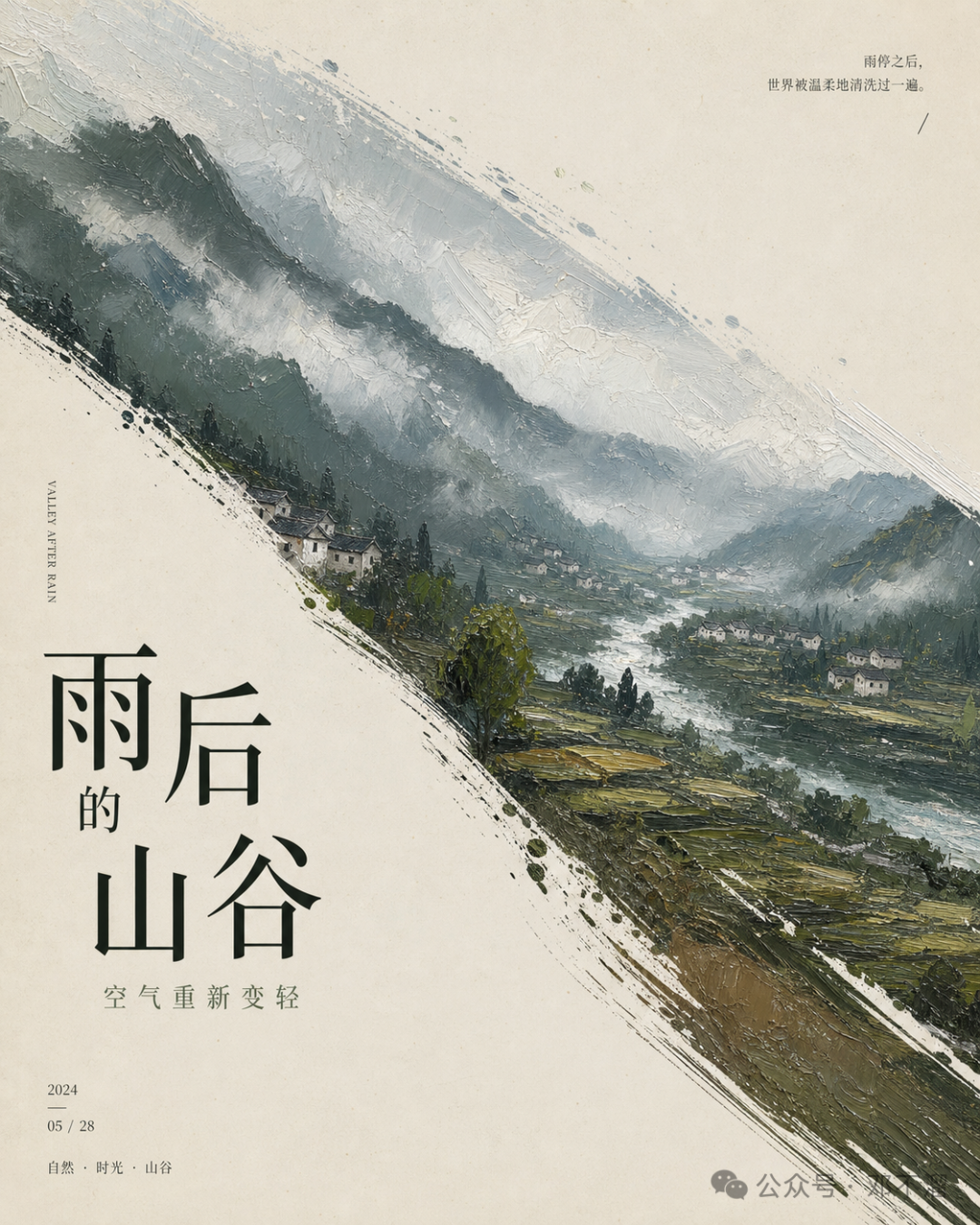
我使用这一结构生成了一幅“雨后山谷”:
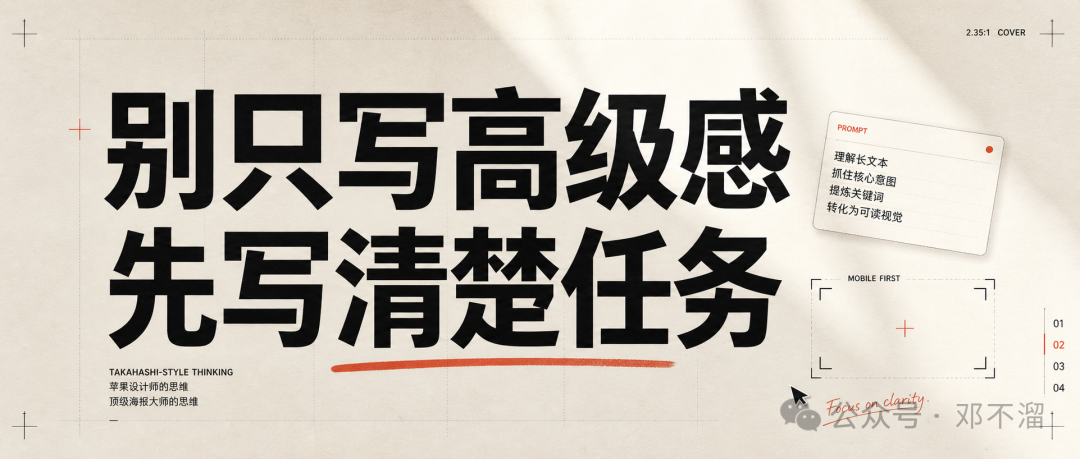
第六类:高桥流大字图
这类风格非常适合用来制作封面。
因为在手机端,公众号封面的展示尺寸非常有限。
文字越小、越繁杂,就越容易被读者忽略。
因此,有时不如直接将核心的一句话放大呈现。
其 Prompt 模板大致如下:
This is an image generation task.
Use Apple-designer thinking, top poster-designer thinking, and Takahashi-style presentation.
First understand the input copy. Do not blindly copy every word.
Extract the strongest core phrase and display it in huge Chinese typography.
The main text must be very large and readable from a distance.
Do not add irrelevant text.
Choose the color palette, negative space, and visual rhythm based on the meaning of the text.
The composition should have breathing room. Do not overcrowd the image.
基于该结构生成的大字图效果如下:
출처
이 페이지는 어떤 공식 자료를 인용하나요?
아래 인용은 APIAny가 구현의 기준으로 삼는 공식 API 문서에서 왔습니다.
The Chat Completions API endpoint will generate a model response from a list of messages comprising a conversation.
The Gemini API provides access to Google's most capable generative AI models.