


One stable API surface
Call Gemini 3.1 Flash Lite with an APIAny key and a documented request format. Keep your application integration stable while model versions and upstream routes evolve behind the gateway.
Model:
Sampling temperature. Lower is more deterministic.
Optional reasoning effort. Leave unset to use the model default. Higher effort can use more tokens and time.
USD estimate $0.0015-$0.003: highest recharge package uses $1 = 2,000 credits; entry package uses $1 = 1,000 credits.
History
Saved locally in this browser
0 running · 0 completed
Input
≈ $0.0001-$0.0003
Output
≈ $0.001-$0.002
Cache
≈ $0.000013-$0.000025
Context
Max output
Authentication
Every request needs a Bearer token in the Authorization header. Create an API key in the console.
Authorization: Bearer YOUR_API_KEYhttps://apiany.ai/v1/chat/completionsRequest parameters
| Parameter | Type | Required | Notes |
|---|---|---|---|
model | string | Required | Model identifier to invoke. Use this model's ID. |
messages | array | Required | Conversation history in OpenAI chat format (role + content). |
stream | boolean | Optional | When true, the response streams back as server-sent events. |
Request example
curl "https://apiany.ai/v1/chat/completions" \
  -H "Authorization: Bearer YOUR_API_KEY" \
  -H "Content-Type: application/json" \
  -d '{
  "model": "gemini-3.1-flash-lite",
  "messages": [
    {
      "role": "user",
      "content": "Summarize the following text in three concise bullet points:"
    }
  ],
  "temperature": 0.7,
  "max_tokens": 1024
}'
Response example
{
  "id": "chatcmpl-abc123",
  "object": "chat.completion",
  "model": "gemini-3.1-flash-lite",
  "choices": [
    {
      "index": 0,
      "message": {
        "role": "assistant",
        "content": "Hello! How can I help?"
      },
      "finish_reason": "stop"
    }
  ],
  "usage": {
    "prompt_tokens": 12,
    "completion_tokens": 18,
    "total_tokens": 30
  }
}Model overview
Google Gemini 3.1 Flash Lite combines low latency and economical inference with multimodal understanding, improved reasoning, and long-context processing.
Measure throughput, latency, review effort, and unit economics against the operating target this model supports.
Gemini 3.1 Flash Lite is available on APIAny as one documented API surface with live pricing, model status, request examples, and an on-page playground. Teams can evaluate the model here, then keep authentication, usage records, and production routing in the same platform.
Try Gemini 3.1 Flash Lite in the playground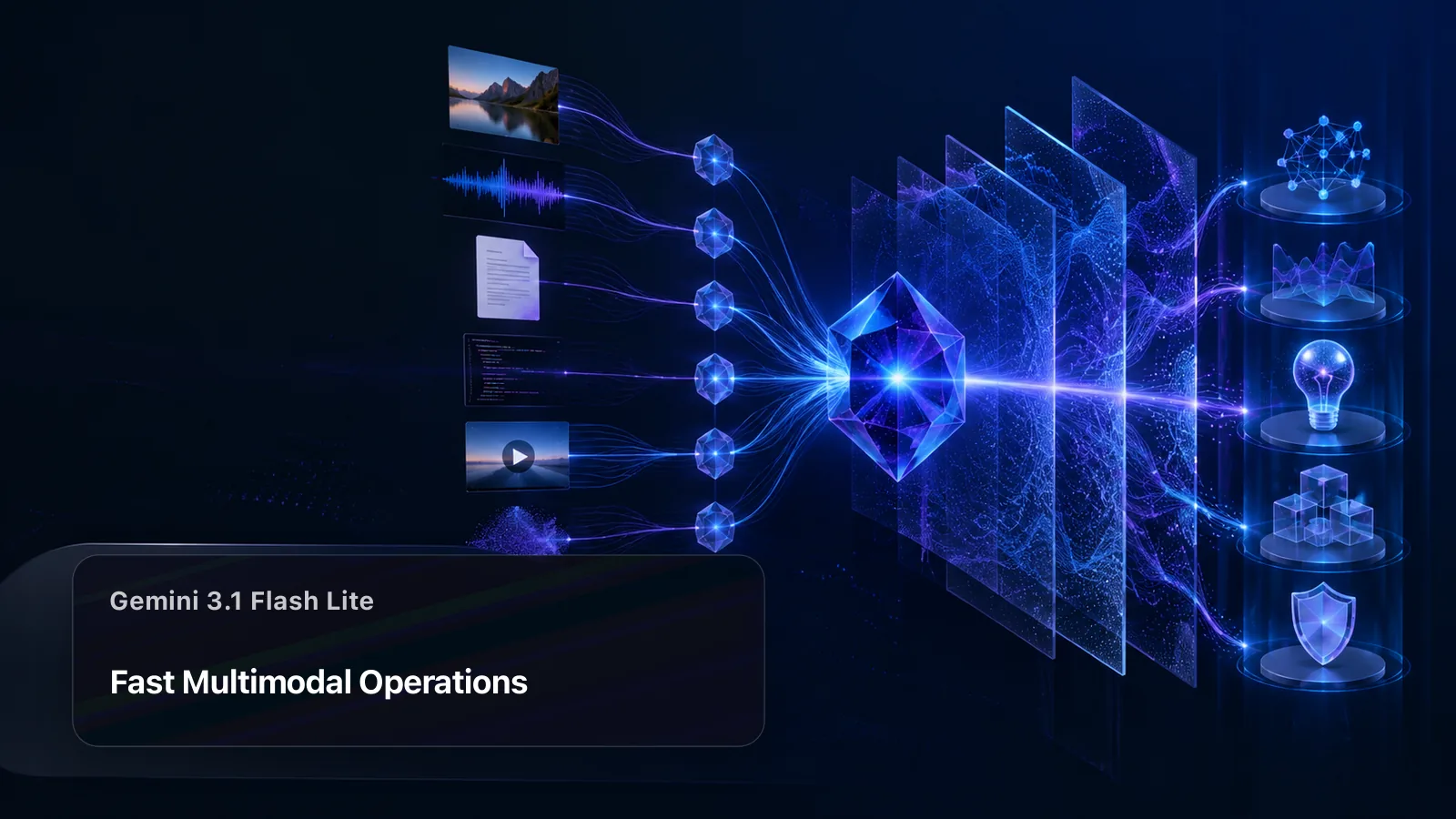
Sources
The quotations below are from official API documentation that APIAny implements against.
The Gemini API provides access to Google's most capable generative AI models.
The Chat Completions API endpoint will generate a model response from a list of messages comprising a conversation.
APIAny advantages
Gemini 3.1 Flash Lite on APIAny is a production route with one key, live prices, status, and usage records, so you do not maintain a separate provider integration.

Call Gemini 3.1 Flash Lite with an APIAny key and a documented request format. Keep your application integration stable while model versions and upstream routes evolve behind the gateway.
Review the live Gemini 3.1 Flash Lite pricing rules before a request, estimate credits in the playground, and inspect request-level usage records after the call completes.
Use cases
The Gemini 3.1 Flash Lite API is used for product workflows that need this model's output. Test the same inputs in the playground, compare related models, and choose the route that meets your quality, latency, and budget requirements.
01
Use Gemini 3.1 Flash Lite for support classification, answer drafting, self-service guidance, and multilingual conversations. Combine retrieval and policy checks so responses stay grounded in current product information.
Try Gemini 3.1 Flash Lite in the playground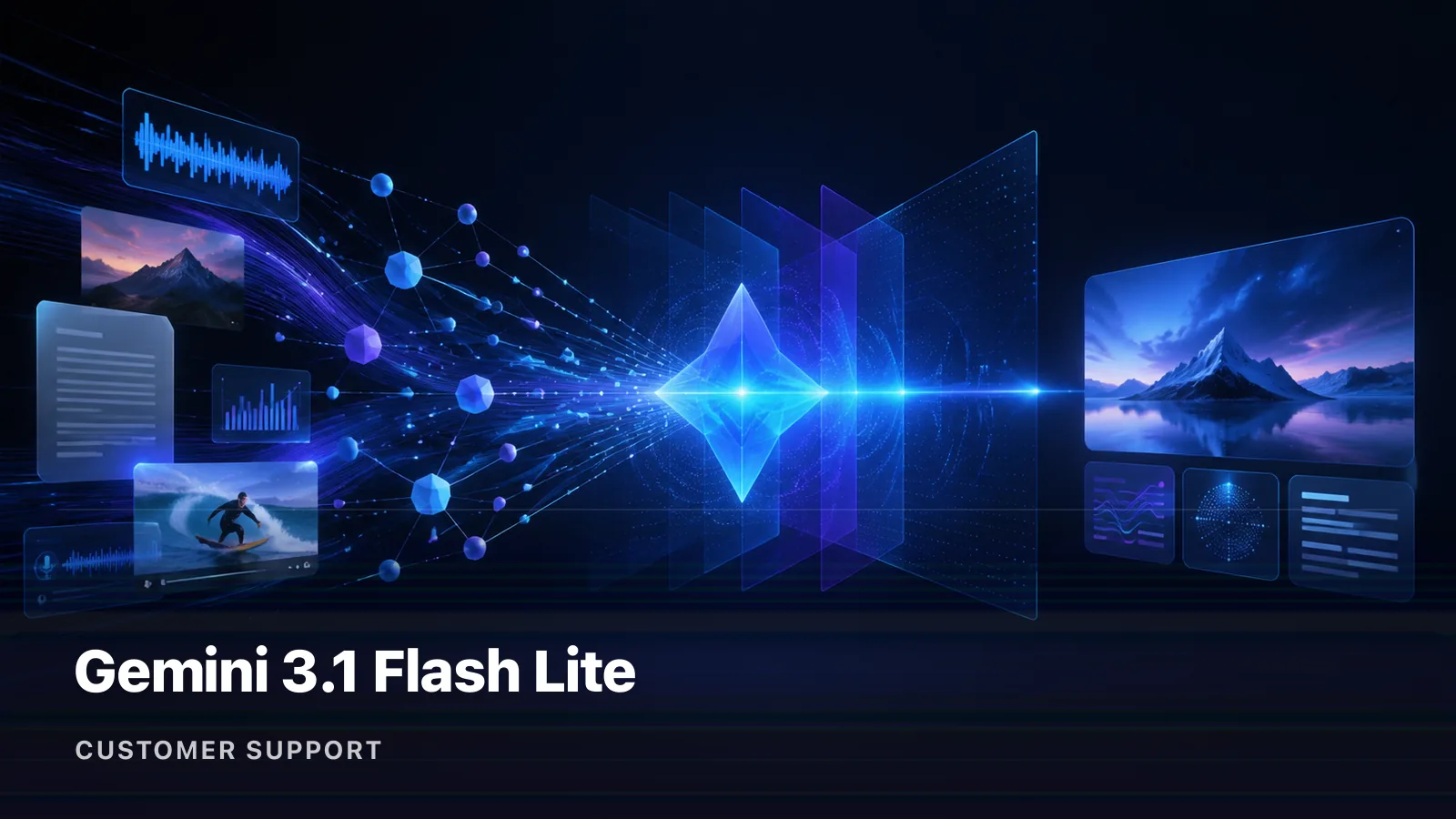
02
Turn messages and documents into labels, fields, or JSON with Gemini 3.1 Flash Lite. Define a strict output schema and validate results before automated downstream actions.
Try Gemini 3.1 Flash Lite in the playgroundIntegration
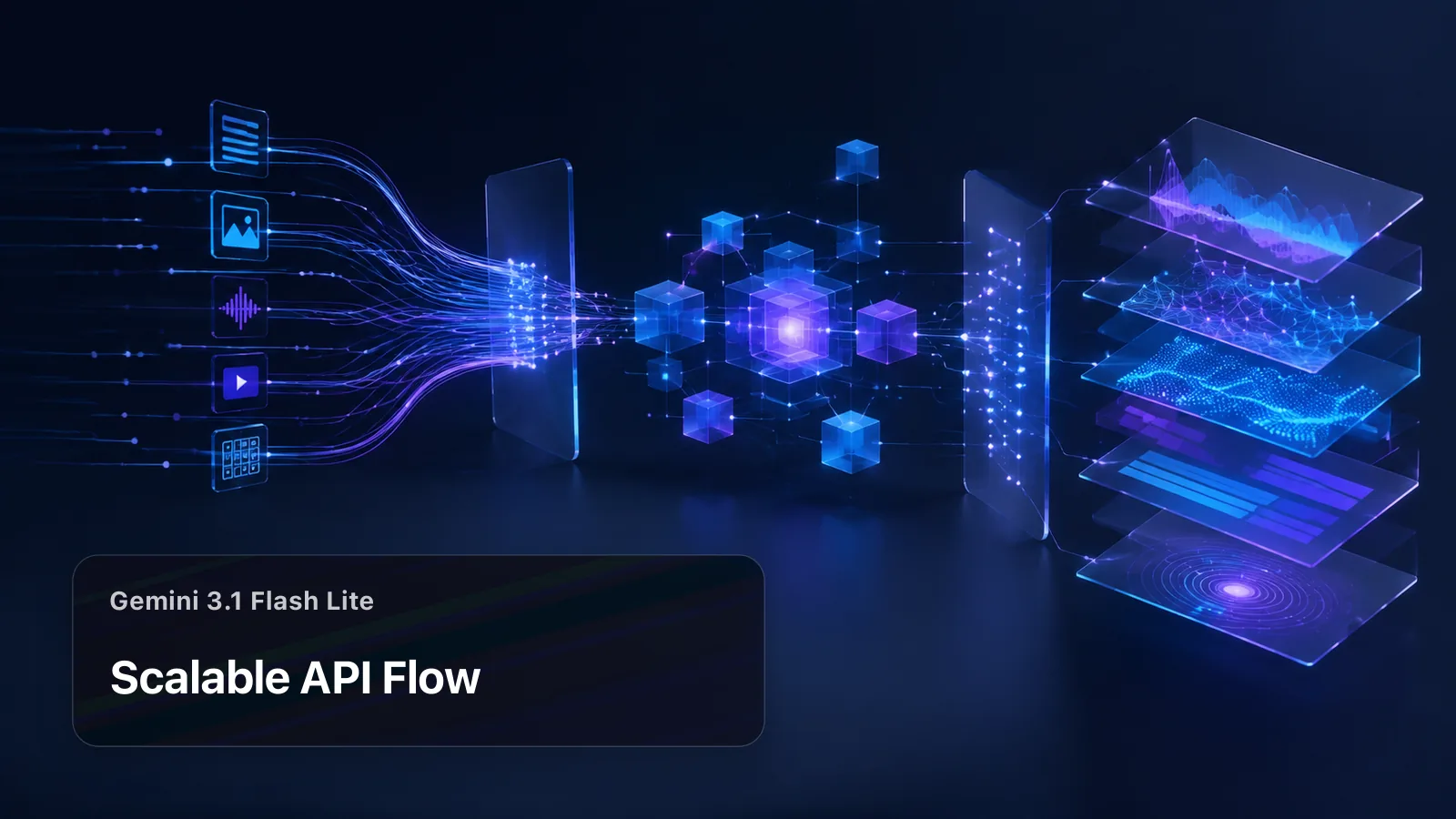
Integrating the Gemini 3.1 Flash Lite API is a three-step path from playground test to authenticated production request. The page keeps the model identifier, request schema, pricing, and response examples together. Deploy with bounded inputs, observable task states, and clear escalation or fallback paths.
Sign in to APIAny, create a project API key, and assign only the model scope and budget controls your application needs.
Copy the request example from this page, set the model field to the selected Gemini 3.1 Flash Lite version, and send it to the documented APIAny endpoint.
Track status, latency, credits, and returned usage. Compare versions or related models with the same workload before shifting production traffic.
Core capabilities
Gemini 3.1 Flash Lite API features are the input, output, and workflow traits that matter when you evaluate this model. Available request parameters remain visible in the live API reference on this page.
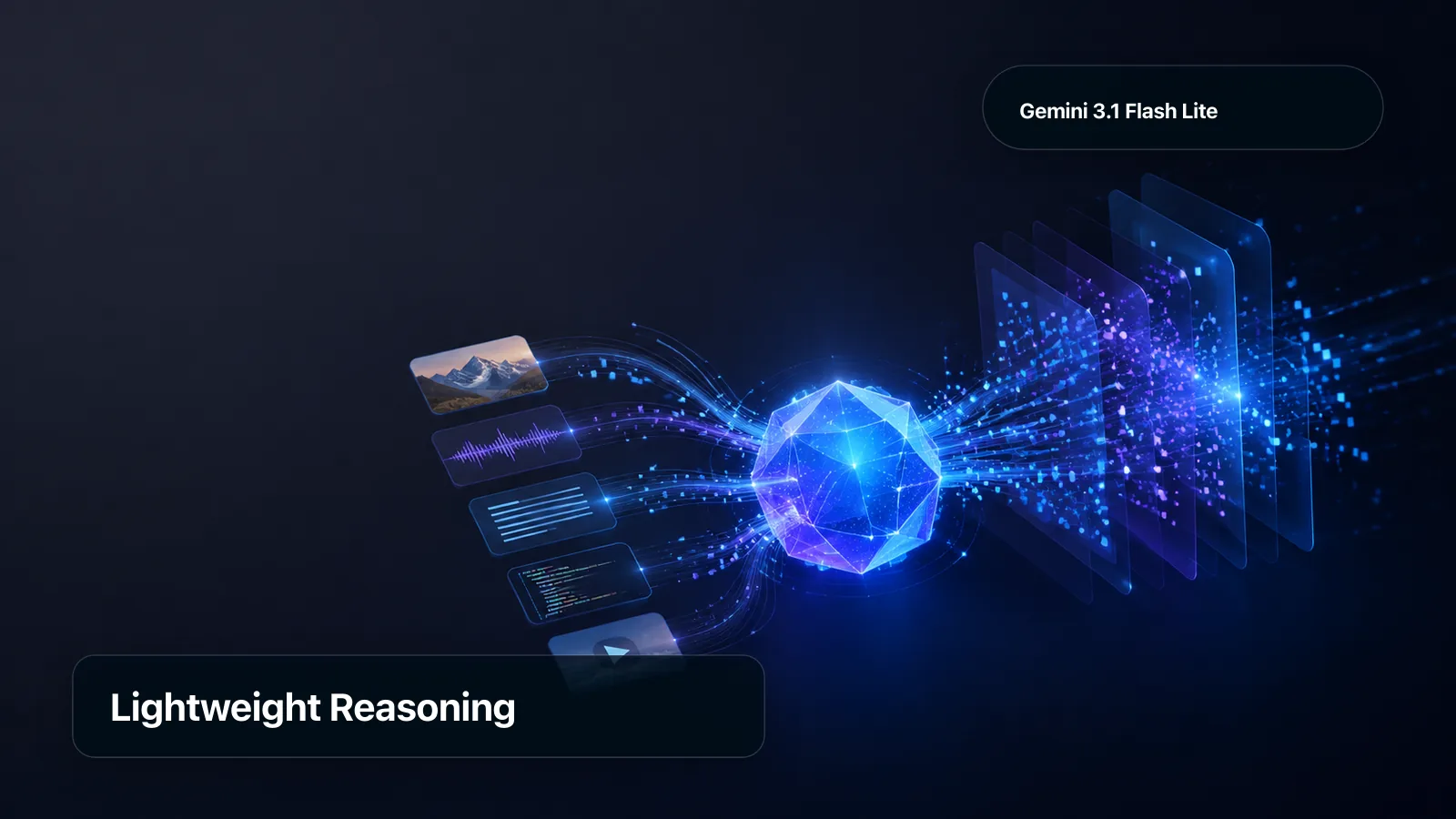
/01
Use the faster Gemini 3.1 Flash Lite route for interactive experiences, rapid iteration, and workloads where response time matters.
/02
Run higher-volume Gemini 3.1 Flash Lite workloads while using live pricing and request-level usage records to control spend.
/03
Use a large context window for codebases, documents, conversation history, and multi-step instructions while monitoring token cost.
/04
Combine supported text and visual inputs so Gemini 3.1 Flash Lite can reason over more than one content format in the same workflow.
FAQ
Direct answers about capabilities, use cases, integration, and choosing the right Gemini 3.1 Flash Lite route.
Google Gemini 3.1 Flash Lite combines low latency and economical inference with multimodal understanding, improved reasoning, and long-context processing. APIAny makes this model callable through an authenticated API with live pricing, status information, request examples, and a browser playground on the same page.
Common Gemini 3.1 Flash Lite workflows include Customer support assistants, Classification and structured extraction, Multilingual assistants. The best fit depends on the input format, output quality, latency, and cost your product requires.
Use model status, channel health, retry policy, and usage logs to operate Gemini 3.1 Flash Lite as part of a production workflow instead of treating it as an isolated demo.

03
Build assistants that understand and respond across languages with Gemini 3.1 Flash Lite. Test terminology, tone, locale-specific formatting, and policy behavior with representative conversations before launch.
Try Gemini 3.1 Flash Lite in the playground
/05
Use Gemini 3.1 Flash Lite to break down multi-step problems, compare alternatives, and produce structured conclusions that can be reviewed.
/06
Render supported Gemini 3.1 Flash Lite text output incrementally for interactive assistants and long-running generation tasks.
Create an APIAny key, use the endpoint documented on this page, and set the request model field to the selected Gemini 3.1 Flash Lite version. The playground can generate a working payload before you integrate it into application code.
Compare the versions shown on this page by price, supported parameters, and capabilities such as Low-latency execution, Cost-efficient scaling, Long-context processing. Test a representative production input before choosing the default route.
 APIAny© 2026 APIAny. All rights reserved.